
How Precisely I Can Leave
On chronic illness and a kind of creativity that requires you to stop

These days I accept my creativity in tiny breadcrumbs.
It’s been one of the biggest sources of grief for me, as a creative person who became chronically ill.
Because I can remember what I used to be able to do.
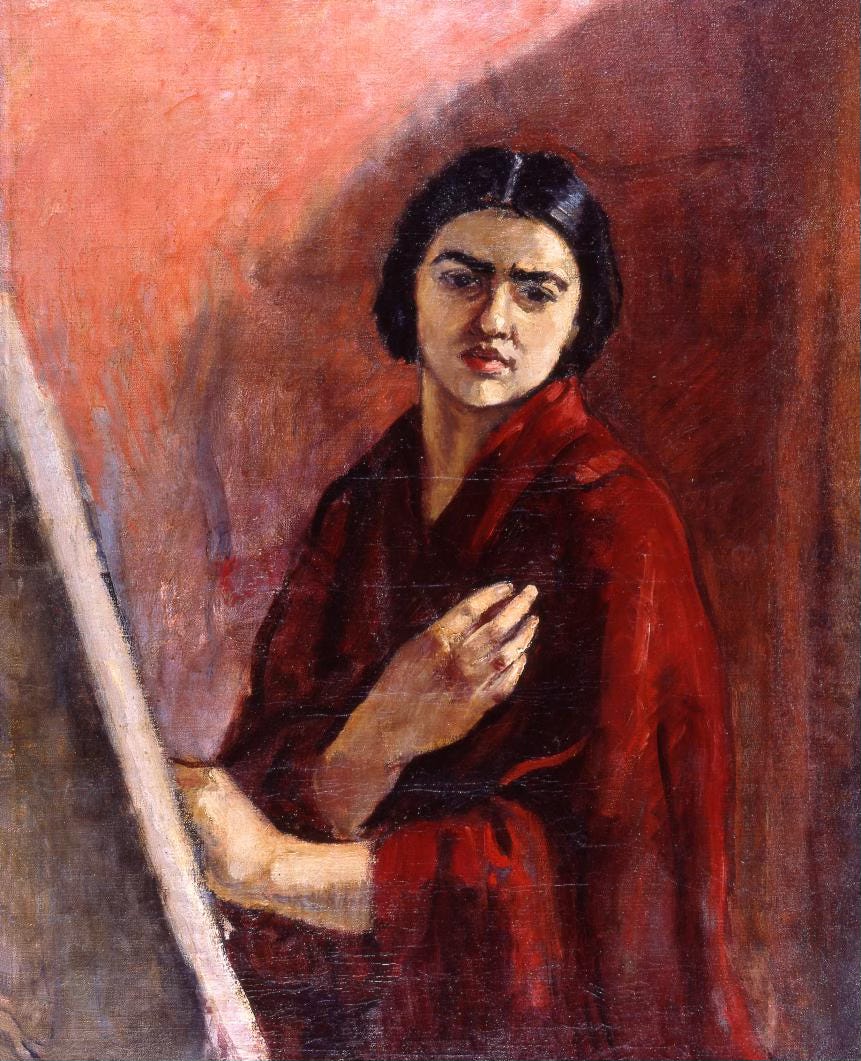
I mourn the ability to dream big combined with the energy to make it happen. I mourn the pieces of my creative soul that I had to put to rest because it felt like they were killing me.
When you’re sick, projects stretch into the horizon with no endpoint. It can feel hopeless.
Your goals have to become portions. Otherwise, they disappear into the whole.
I have only crumbs now.
But crumbs force a different kind of attention. With something so small, it’s even more treasured. I hold it gently so it doesn’t disappear. I keep my eye trained on it.
With only minutes worth of energy to spare, I don’t waste time pretending I’m not tired. I enter that vulnerable space with haste and honesty I had to work so hard to reach before.
I’ve found the perfectionism that used to plague me is background noise now.
If my body is like this — this thing the system says isn’t good enough, this sick thing, this frail thing — and I accept it, then maybe nothing else has to be perfect either.
Not me. Not my art.
It seems I learned how to be sick.
There’s an invisible skill I’ve had to perfect: stopping.
It’s something I truly didn’t understand when I had more capabilities. I didn’t have to, when I could still pass as able-bodied. I constantly ignored my limits.
Anyone can push through, but very few people know how to stop before harm.
I’ve learned that stopping is a creative discipline. It’s a form of self-trust. It’s a refusal to sacrifice tomorrow for today’s output.
My creative practice used to be about how long I could go. Now it’s about how precisely I can leave.
I used to be able to work on music for hours. Never as long as my peers, but still always riding on the cusp of acceptable. An amount that meant I could hide my disabilities from others. A blessing and a curse.
Now the dissociating starts after about 45 minutes. Sometimes I’ll hang on, trying to stop from slowly floating away from my body.
But then I just can’t. And as any chronically ill person knows, once you hit the just can’t, you’ve ruined the next day too. Maybe even the next few days.
That’s the violence in overshooting your limits. Capitalism trains us to ignore that signal.
Chronic illness makes that signal non-negotiable.
Healthy people experience just can’t as a suggestion. For me, it’s a consequence.
I wonder, if you can’t measure your creativity by output anymore, what is left?
These days it’s become about staying in relationship with my art.
Some days the goal isn’t to make something.
Just to touch it so it knows I’m still here.
What I miss most is the immersion. Sinking into a headspace with the spirits. Losing track of time to look up hours later at the shifted light.
I miss the version of myself that didn’t have to negotiate with my body.
The grief of losing creative ability is a special ache.
It brings an anger that scalds if you hold it too tightly. A fear that paralyzes.
What’s the point if I can only have crumbs of a former creation?
Disabled creativity has been teaching me about the power of staying. The power of the smallest increments over time.
It’s teaching me to step back. If I stay too close to a project, I forget to appreciate that two months ago it didn’t exist and now it has a form.
And no matter that final form, I still made something out of nothing. That’s precious.
It’s teaching me that creativity still exists, even if the form isn’t recognizable. That something small is still something. That something spectral is still something.
I don’t get to disappear into my creativity anymore. But sometimes, briefly, it still finds me.
And maybe that’s what these crumbs are.
Not the remains of something I’ve lost, but a way of being fed differently.
So I’ll meet it.
I stay as long as I can.
And then I leave.
On purpose.
Which, it turns out, is its own kind of devotion.
What are you learning to do in smaller ways than before?


“I’ve learned that stopping is a creative discipline. It’s a form of self-trust. It’s a refusal to sacrifice tomorrow for today’s output.” Perfectly captured. It’s been amazing for me to see how my body recognizes the activities where I have historically exceeded my limits. Where in the past I have consistently not listened. Thankfully she is forgiving, and I’m now doing the slow work of regaining her trust. And I find it ultimately benefits my work — the product — to step away and return with refreshed perspective.
This piece gave language to something I’ve been thinking about.
What struck me is that I don’t actually know the grief of losing immersion creatively, because my writing life developed after chronic illness already shaped my days.
I never learned to create without awareness of energy, time, or the body.
So my work has always been built in fragments. A note here. A story there. A moment of clarity when capacity allows.
Over time, the pieces begin speaking to each other.
And eventually, a larger shape emerges.