
Not Queer Enough
On asexuality, Pride, and the freedom not to desire

It’s Pride Month, and despite being queer, it’s a month I’ve never connected with. As an asexual person, I feel like the last letter in the alphabet. An afterthought in the LGBTQIA acronym. I feel tacked on and misunderstood.
Never truly a part of that community. Never to be queer enough.
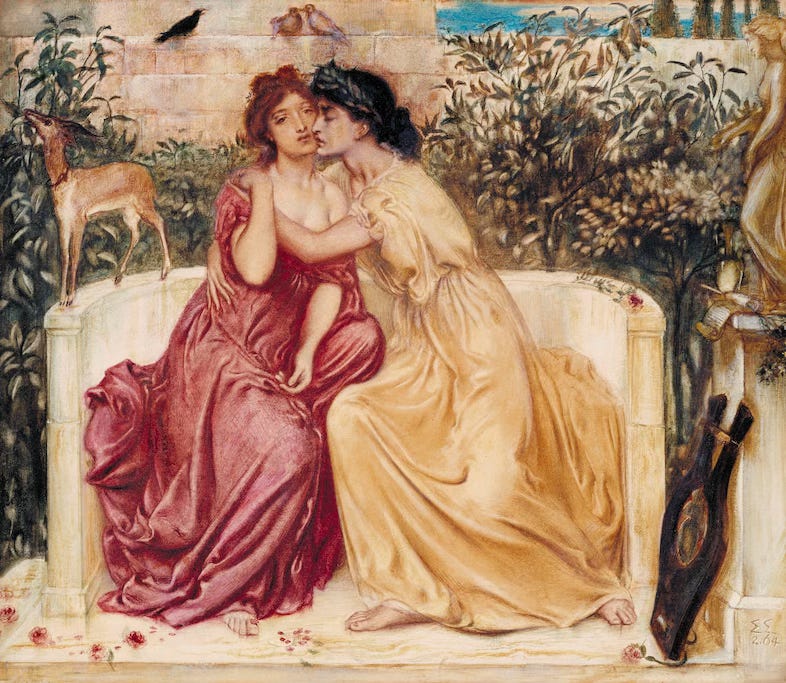
The celebration of Pride itself often feels like the celebration of sexuality, of freedom and sexual liberation. But when you don’t feel sexual attraction like others it can get a little uncomfortable. How am I allowed to participate?
When sexual freedom only includes those who want sex, it’s not truly sexual freedom at all.
We live in a world of compulsory sexuality. It’s the societal expectation that everyone experiences sexual attraction, desires sex, and must participate in it to live a normal, healthy life.
“Under compulsory sexuality, the desires of those with normative sexual urges are prioritized. It’s a belief system that eschews consent and preaches instant gratification for people who want sex, but cares not for the safety, comfort, health, or autonomy of people who do not.”
— Sherronda J. Brown, Refusing Compulsory Sexuality: A Black Asexual Lens on Our Sex-Obsessed Culture
Despite not having words to call it, I felt this phenomenon from a young age. In college, I assimilated by kissing my girlfriends at parties. In my twenties, I posed nude as much as I could in my artist photos. I pursued casual sex even when I wasn’t particularly interested in it. I chose polyamory in my first serious relationship even though it made me scared. I subconsciously knew all along the best way to seem open-minded, liberated, and forward-thinking was by appearing sexually free.
Even though some of these pressures to be sexually open were fun and weren’t truly harmful, the reasons I did them were out of fear of ostracization and a pressure to be seen a certain way. It shouldn’t have relied on me using my body and my sexuality to be seen the way I was inside. We should be allowed to be liberated and not want to have sex.
Looking back, I wasn’t trying to be sexually free. I was trying to be accepted.
Those aren’t always the same thing.
Real liberation isn’t replacing one set of expectations with another. It’s having the freedom to choose what feels true for you.
Even though polyamory was frightening to me at first, it’s a fear I’m glad I faced. My partner Cam and I are still together a decade later.
And ethical non-monogamy has truly changed my life and strengthened our relationship. It forced a completely open communication between us. And through the trust that we built over years of openness, I was able to face my jealousy, finding underneath it was a deep wound of not feeling enough.
This work wasn’t easy. It was many difficult conversations. Lots of nights alone, while my partner went out on dates, feeling too much and needing to tend to the younger parts of myself. But it was worth it.
The irony isn’t lost on me. I spent years performing sexuality to earn belonging, only to discover that what I was really hungry for was worthiness. The real work was in learning that I wasn’t going to be abandoned for being who I am. Not despite my asexuality, but including it.
These days, Pride feels a little different to me.
I’m still not the first story people think of when they picture queerness. But I’ve come to see that my asexuality belongs here too.
Pride isn’t just about the freedom to express desire. It’s also about the freedom not to.
On another note, Cam and I recorded our first podcast together a few months ago, and it’s finally releasing to the world!
Sex in Space is an inclusive, open-minded series exploring human sexuality across all its infinite dimensions. Through candid interviews, the show features stories and voices from all genders, ages, ethnicities, and walks of life, focusing on the sociology, psychology, and science of intimacy both on Earth and in the universe.
We talk to the lovely Toshi about:
What asexuality and compulsory sexuality is
How I came to understand I’m asexual
What it was like for both myself and Cam to embrace my asexuality
Common misconceptions about what it means to be asexual
How neurodivergence is connected to this conversation
Thoughts on decoupling romance from sex
And more.
Check it out here:
More Essays I’ve Written:
I’m 38 and I Can’t Support Myself Anymore

Content Note: This essay includes discussion of disability, financial precarity, poverty, and distress related to inability to work.
I Thought I Was a Monster

Content note: this piece talks about autistic meltdowns and includes brief mentions of self-harm.

Oh, I felt this one too! Different situations entirely for me, though. Finally realizing that I'm ace was very freeing, and it caused me to look hard at my past experiences and why I did the things I did. For me, I've always deeply longed for love. And I figured the way to get love was to have sex.
For me, I'm not particularly repulsed by sex. I know some ace people are. But the reality, I discovered, was that I could take it or leave it. I could enjoy the physical aspects of it (especially with someone I love), but I don't think about it. I don't desire it. I don't miss it when I don't have any. It's been almost three years for me, and I haven't missed it.
Asexuality really is a spectrum. Everyone's different in what they can tolerate, and those feelings matter.
I have felt probably every type of way when it comes to my sexuality, but I felt most myself when I was researching asexual relationships. There is so much more to life, to love, to connection than sex. Beautifully written!